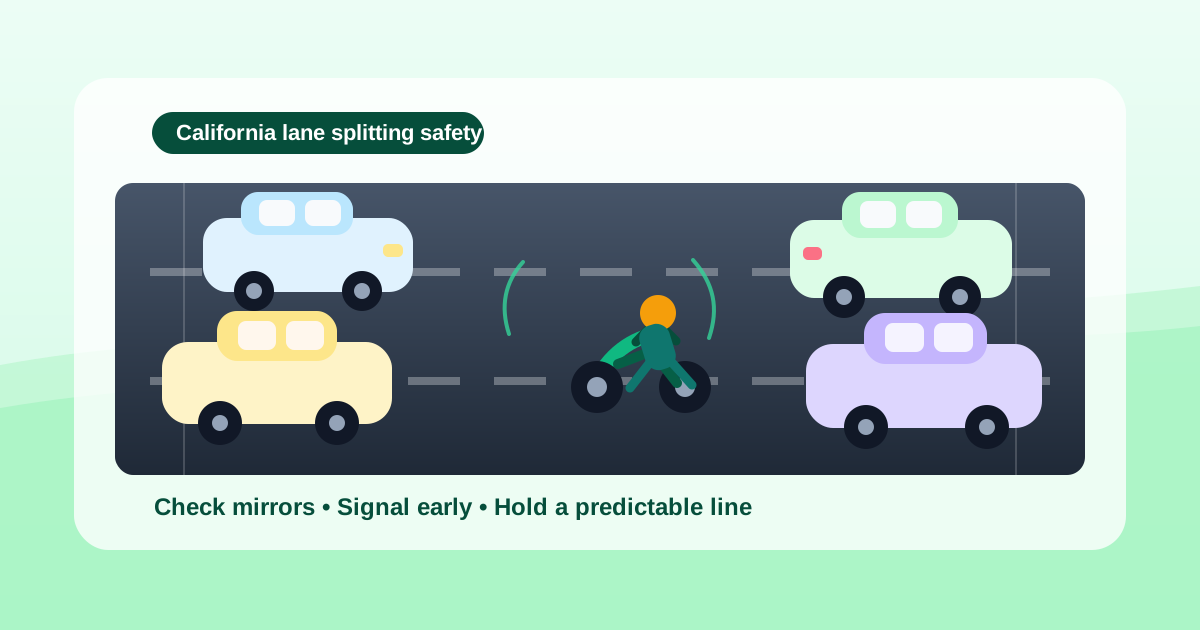
For drivers who learned in another state, the first encounter can feel surprising: traffic is barely moving, and a motorcycle passes between two lines of cars. The safest response is not to swerve, block, crowd the lane, open a door or make a sudden correction. It is to stay predictable, check carefully before any lane movement and leave space when it can be done safely.
California Rule at a Glance
Lane splitting is legally recognized in California. Drivers should remain predictable, check mirrors and blind spots, signal before moving and never intentionally block or impede a motorcyclist.
Quick Answer
California law defines lane splitting as a two-wheeled motorcycle riding between rows of stopped or moving vehicles in the same lane, including on divided and undivided streets, roads or highways.
Car drivers should expect motorcycles between lanes in congested traffic. Before changing lanes, opening a door or drifting toward a lane line, check the rearview mirror, side mirror and blind spot. Signal early, move smoothly and never intentionally block or impede a motorcyclist.
Key Takeaways
- Lane splitting is legally recognized in California.
- California defines lane splitting as a motorcycle riding between rows of stopped or moving vehicles in the same lane.
- Drivers should not intentionally block or impede a motorcyclist.
- Opening a door to impede a motorcycle is dangerous and illegal under CHP guidance.
- There is no single universal lane-splitting speed limit in Vehicle Code section 21658.1.
- Motorcycles can be hard to see in blind spots, especially near lane lines.
- Before changing lanes, use mirrors, signals and a shoulder check.
- Shoulder riding is not the same as lane splitting.
- Fault after a collision depends on specific facts, not on lane splitting alone.
What Is Motorcycle Lane Splitting?
California Vehicle Code section 21658.1 defines lane splitting as driving a two-wheeled motorcycle between rows of stopped or moving vehicles in the same lane. The definition includes divided and undivided streets, roads and highways.
In everyday language, drivers often describe this as a motorcycle riding between lanes of cars during traffic. It is most common when traffic is slow, stopped or unevenly moving.
Lane splitting is not the same as a car and motorcycle casually sharing a lane side by side. It is also not the same as a motorcycle riding on the shoulder, emergency lane, sidewalk or other space that is not a normal traffic lane.
Is Lane Splitting Legal in California?
Yes. California legally recognizes lane splitting, and the California Highway Patrol publishes motorcyclist-safety guidance that addresses both riders and drivers.
For car drivers, the practical point is simple: a motorcycle between lanes is not automatically doing something illegal merely because it is between cars. Do not try to enforce your own interpretation by blocking, crowding or opening a door.
Does California Set One Lane-Splitting Speed Limit?
Vehicle Code section 21658.1 does not set one universal lane-splitting speed limit. That does not mean every lane-splitting maneuver is safe. Speed, traffic flow, spacing, weather, visibility, lane width and driver behavior still matter.
Drivers should avoid assuming that a motorcycle is either safe or unsafe based only on the fact that it is between lanes. The safer habit is to scan early and move predictably.
Where Are Drivers Most Likely to See Lane Splitting?
Car drivers are most likely to see lane splitting on congested freeways, near stop-and-go commuter traffic, approaching red lights, near freeway exits and interchanges, around lane drops, in traffic backups after a crash or work zone, and between the far-left lanes of a multi-lane roadway.
CHP guidance notes that lane splitting between the far-left lanes is generally safer than splitting between other lanes. Drivers in those lanes should be especially alert when traffic slows.
A Simple Four-Step Method for Car Drivers
Use this defensive-driving sequence when a motorcycle is lane splitting near your vehicle.
1. Notice the Rider
Scan mirrors regularly in traffic, not only when changing lanes. Look near lane lines, between rows of vehicles and in blind spots.
2. Hold a Predictable Position
Maintain your lane position. Avoid sudden swerves, last-second blocking, drifting toward the lane line or accelerating because a motorcycle is approaching.
3. Create Room When Safe
If you are in the far-left lane and it is safe, CHP guidance says moving left can give motorcyclists more room. Do not move abruptly or into another hazard.
4. Check for Another Motorcycle
One motorcycle may be followed by another. After the first rider passes, check again before changing lanes or returning to your usual lane position.
Should Car Drivers Move Over?
Sometimes, but only when it is safe. A small, steady adjustment away from the lane line can help a motorcyclist pass with more space. A sudden movement can create the opposite result.
If you cannot move safely, the right answer is usually to stay predictable. Hold your lane, avoid crowding the line and let the motorcycle make its own decision.
Do Not Block, Crowd or Open a Door
CHP guidance says intentionally blocking or impeding a motorcyclist in a way that could cause harm is illegal. It also says opening a vehicle door to impede a motorcycle is illegal.
This matters in congestion, curbside traffic, ride-share pickup areas and freeway backups. Before opening a door, check mirrors and look over your shoulder. A motorcycle, bicycle or scooter may be approaching along the side of the vehicle.
Lane-Change Checklist
Before moving across a lane line in California traffic, use this checklist in order:
- Rearview mirror
- Side mirror
- Signal
- Shoulder check
- Check lane line
- Wait clear gap
- Move smoothly
The shoulder check matters because motorcycles can disappear in blind spots. A mirror glance alone may not show a motorcycle riding near the lane line.
Blind Spots, Exits and Interchanges
Motorcycles are smaller than cars and can be hidden by pillars, mirrors, headrests, trucks and adjacent vehicles. In stop-and-go traffic, the relative position changes quickly even when every vehicle seems slow.
Exits and interchanges deserve extra caution because cars are braking, merging, accelerating and crossing lanes. Avoid sudden lane changes toward an exit when traffic is congested. Signal earlier, check twice and accept that missing an exit is safer than cutting across a motorcycle's path.
When Traffic Starts Moving Again
Lane splitting often happens in slow traffic, but the traffic pattern can change suddenly. When vehicles accelerate, a motorcycle may still be between rows of cars. Before returning to the center of the lane or changing lanes, check whether a rider is still beside or behind you.
Do not accelerate aggressively to close a gap around a motorcycle. Smooth acceleration gives everyone more time to separate safely.
What If a Motorcycle Passes Very Close?
If a motorcycle passes close to your vehicle, keep your lane and avoid a startled correction. Do not chase, honk aggressively or move toward the rider. When safe, increase following distance and let the situation open up.
If there is mirror contact or a collision, move to a safe location if possible, check for injuries, call emergency services when needed, exchange information and document the scene. Avoid arguing about fault at the roadside.
Shoulder Riding Is Different
CHP guidance distinguishes lane splitting from riding on the shoulder. A motorcycle traveling on the shoulder is not lane splitting. Drivers should still avoid abrupt movements toward the shoulder and should use extra care around disabled vehicles, emergency scenes and merge areas.
Large Trucks, Buses and Wide Vehicles
Lane splitting around large trucks, buses, trailers and wide vehicles can be harder for everyone. The vehicle may block sight lines, reduce lane space and hide a motorcycle until the last moment.
Car drivers near large vehicles should avoid squeezing into narrow gaps, drifting between lanes or changing lanes without a full shoulder check. Give both the truck and the motorcycle more room whenever traffic allows.
Right-of-Way and Fault After a Crash
Lane splitting being legal does not automatically decide fault after a crash. A rider can still make an unsafe maneuver, and a car driver can still make an unsafe lane change, open a door, fail to signal, drift or intentionally block.
Fault depends on the facts. This guide is educational and should not be treated as legal or insurance advice about a specific collision.
Seven Mistakes Car Drivers Should Avoid
Drifting toward the lane line in slow traffic
Changing lanes after only a mirror glance
Blocking a motorcycle because lane splitting feels unfamiliar
Opening a door without checking behind
Accelerating to close a gap
Cutting across lanes near an exit
Assuming the first motorcycle is the only motorcycle
Remember: Mirror, Signal, Shoulder
A simple phrase can prevent many lane-splitting surprises: mirror, signal, shoulder. Check the mirror, signal early and turn your head enough to check the blind spot before moving.
This habit helps with motorcycles, bicycles, scooters, fast-moving vehicles and cars that may be hidden beside you.
Visitors and Rental-Car Drivers
Visitors and rental-car drivers should know that California traffic may include motorcycles riding between lanes. Do not copy local traffic behavior without understanding the surroundings. If lane splitting surprises you, hold your line, slow smoothly if needed and give space when safe.
If you are renting a car in California, review mirrors and blind spots before entering traffic. Different vehicles have different pillar size, mirror visibility and blind-spot warnings.
Related California Driving Resources
For broader research, compare California defensive driving courses, review California driving requirements, read the California Move Over Guide, read the California driverless-car Guide, read the California extreme heat driving Guide, review safe-driving essentials, or browse California guides.
Frequently Asked Questions
Is motorcycle lane splitting legal in California?
Yes. California law recognizes lane splitting by a two-wheeled motorcycle between rows of stopped or moving vehicles in the same lane.
Can a car driver block a motorcycle that is lane splitting?
No. CHP guidance says intentionally blocking or impeding a motorcyclist in a way that could cause harm is illegal.
Can I open my door to stop a motorcycle from passing?
No. CHP guidance says opening a vehicle door to impede a motorcycle is illegal and dangerous.
Do I have to move over for a lane-splitting motorcycle?
Drivers should keep a predictable path and, when safe, create room. CHP guidance notes that drivers in the far-left lane should move left when safe to give motorcyclists room.
Is there a maximum legal speed for lane splitting?
California Vehicle Code section 21658.1 does not set one universal lane-splitting speed limit. Drivers should still expect motorcycles in slow or stopped traffic.
Is riding on the shoulder the same as lane splitting?
No. CHP guidance distinguishes lane splitting from shoulder riding. Riding on the shoulder is not lane splitting.
Who is at fault if a lane-splitting motorcycle hits a car?
Fault depends on the specific facts, including speed, lane position, signals, mirrors, door opening, lane changes and whether either road user acted unsafely.
Should I use my mirrors or turn my head before changing lanes?
Use both. Check the rearview mirror, side mirror and blind spot, signal, then move only when the gap is clear.
Can motorcycles pass between lanes near freeway exits?
Motorcycles may be present near exits and interchanges, but those areas can be more complex because cars are merging, braking and changing lanes.
What should visiting drivers know?
Visitors should know that lane splitting is legally recognized in California, so they should not block motorcycles or react suddenly when a motorcycle passes between lanes.
The Bottom Line
California drivers should expect motorcycles to appear between lanes, especially when traffic slows. Lane splitting is legally recognized, and the safest response for car drivers is calm, predictable driving.
Check mirrors and blind spots. Signal before moving. Do not block, crowd or open a door to impede a rider. If you can safely create room, do so smoothly. If you cannot, hold your position and let the rider pass.
Official Sources
- California Vehicle Code section 21658.1
- California Highway Patrol: California Motorcyclist Safety
- California DMV Driver Handbook: Sharing the Road
- California DMV Motorcyclists Guide
- California DMV Driver Handbook: Safe Driving
- California DMV Driver Handbook: Navigating the Roads
- California Office of Traffic Safety: Motorcycle Safety
Disclaimer
This guide is provided for general educational purposes and does not constitute legal, insurance or driving-instruction advice. Traffic conditions and collision facts vary. Confirm current requirements with official California sources and consult an appropriately qualified professional for questions about a specific citation, crash or claim.