Current Update
California’s expanded Move Over requirements took effect January 1, 2026. Road and enforcement conditions may vary, so drivers should follow current signs, law-enforcement directions and official California guidance.
Quick Answer
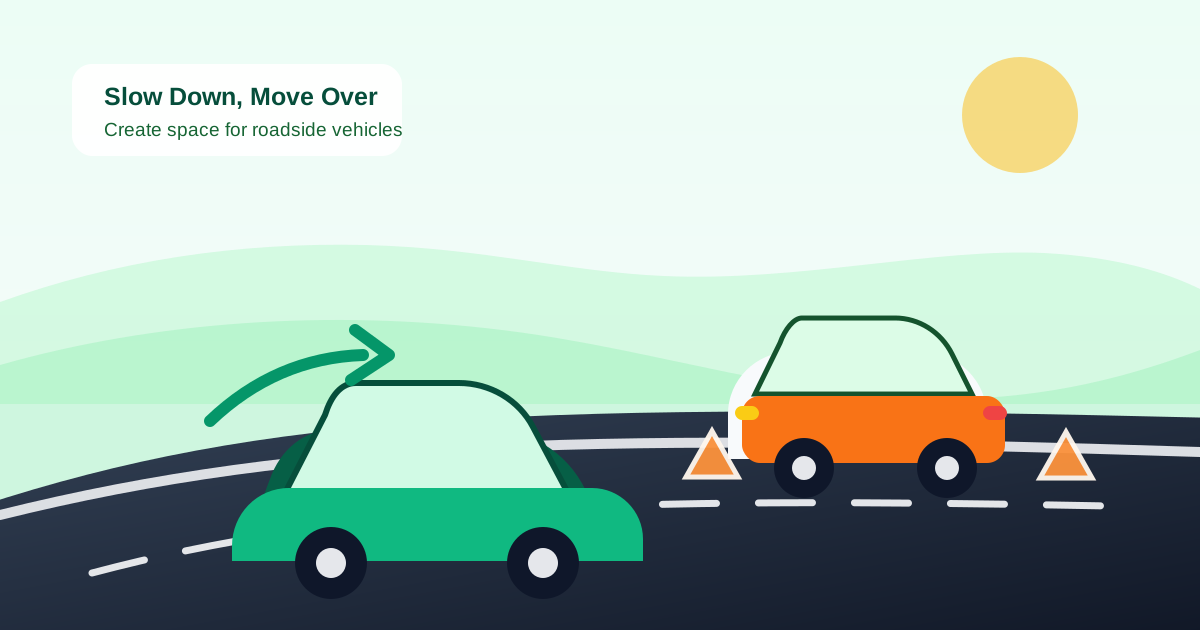
When approaching a stationary vehicle displaying emergency lights, flashing hazard lights or another warning device, California drivers should move into a lane that is not immediately next to the stopped vehicle when the lane change is legal, practical and safe.
If changing lanes would be unsafe or impractical, the driver should reduce speed to a reasonable and prudent level for the current road, weather, traffic, visibility and pedestrian conditions. The law does not require a dangerous last-second lane change.
Key Takeaways
- California expanded its Move Over rule effective January 1, 2026.
- The rule now covers more than emergency vehicles and tow trucks.
- A regular roadside vehicle using hazard lights may qualify.
- Cones, flares and retroreflective warning devices may also qualify.
- Drivers should change into a nonadjacent lane when it is safe and legal.
- When a lane change is unsafe, drivers must slow to a reasonable and prudent speed.
- The law does not create one universal reduced speed.
- The statutory requirement does not apply when a protective physical barrier separates the stopped vehicle from traffic.
- A violation is an infraction and may carry a fine of up to $50 under the statute.
What Changed in 2026?
California’s earlier Move Over requirements focused largely on stationary emergency vehicles, tow trucks and marked Caltrans vehicles using warning lights. Assembly Bill 390 broadened the rule.
The updated law now includes stationary authorized emergency vehicles displaying emergency lights, tow trucks displaying flashing amber lights, marked highway-maintenance vehicles displaying flashing amber lights, other stationary vehicles displaying hazard lights, and vehicles using warning devices such as cones, flares or retroreflective equipment.
The change recognizes that people standing beside disabled or stopped vehicles face many of the same dangers as police officers, tow operators and highway workers. A driver passing only a few feet away at freeway speed can create a serious risk even when no collision occurs.
Does the Rule Apply to an Ordinary Car With Hazard Lights?
It can. A regular passenger vehicle stopped near the highway and displaying flashing hazard lights may fall within the expanded rule.
Examples may include a vehicle with a flat tire, a car that has overheated, a mechanical failure, a minor collision, a driver waiting for roadside assistance, an electric vehicle with a depleted battery, or a disabled vehicle using cones, flares or reflective triangles.
The safest approach is not to wait until you identify exactly why the vehicle stopped. Once you see warning lights or roadside safety devices, begin assessing whether you can safely create more distance.
Do You Always Have to Change Lanes?
No. California law requires a lane change only when the move is practical, legal and safe under the existing traffic conditions.
Drivers should not cut off another vehicle, cross a prohibited lane marking, enter an occupied lane, make a sudden high-speed maneuver, move into a closing lane, or lose control while trying to comply.
When changing lanes would be unsafe or impractical, the driver should remain in the lane and slow to a reasonable and prudent speed. The law is designed to create safety, not to require one dangerous maneuver to avoid another danger.
How Much Should You Slow Down?
California’s expanded law does not provide one fixed speed that applies in every situation.
The driver must choose a speed that is reasonable and prudent for factors such as the posted speed limit, traffic volume, shoulder width, weather, road surface, visibility, pedestrians, roadside workers, how close the stopped vehicle is to active traffic, and whether a safe lane is available.
A driver on a clear, lightly traveled freeway may be able to change lanes early. A driver in heavy traffic may need to remain in the current lane, release the accelerator, increase following distance and pass the stopped vehicle at a substantially safer speed.
Practical Tip
Do not wait until you are beside the disabled vehicle to brake. Begin reducing speed as soon as you recognize the roadside warning. Early, gradual deceleration gives drivers behind you more time to react.
What Does “Reasonable and Prudent” Mean?
Reasonable and prudent depends on the circumstances. It does not mean that any reduction in speed is automatically enough. For example, reducing from 70 mph to 68 mph while passing a person standing close to the lane may not create meaningful protection.
Drivers should consider whether the chosen speed gives them enough time to react if a person steps toward the road, a car door opens, a tire or tool rolls into traffic, a tow operator moves around the vehicle, a passenger exits unexpectedly, the disabled vehicle begins moving, or another driver brakes suddenly.
The safest speed is one that reflects the actual hazard, not merely the normal speed of surrounding traffic.
A Simple Three-Step Method
Use this sequence whenever you see a stopped vehicle ahead: identify, create space and slow down.
Step 1: Identify the Hazard Early
Look for hazard lights, emergency lights, amber lights, cones, flares, reflective triangles, people standing near the shoulder, a tow truck or a maintenance vehicle. Avoid focusing only on the stopped vehicle. Continue scanning traffic ahead and behind.
Step 2: Create Space
Check mirrors and blind spots. When a nonadjacent lane is open and the move is legal, signal early and change lanes smoothly. Do not accelerate aggressively to force your way into another lane.
Step 3: Reduce Speed When Necessary
When you cannot move over safely, ease off the accelerator, increase following distance, cover the brake, avoid sudden steering, watch for people or objects entering the lane, and pass only when there is enough space.
This three-step method is easier to remember than waiting until the last moment to decide.
What if You Are Driving in the Middle or Left Lane?
The law is most relevant to a driver traveling in the lane immediately adjacent to the stopped vehicle. If you are already one or more lanes away, do not make an unnecessary lane change toward the hazard.
However, remain alert for other drivers moving away from the shoulder. A vehicle in the right lane may need to merge into your lane quickly. Leave room when possible instead of blocking the merge.
Practical Tip
When you see hazard lights ahead, expect the adjacent-lane driver to move over. Avoid accelerating into that driver’s blind spot.
What if Traffic Is Very Heavy?
Heavy traffic does not eliminate the safety responsibility, but it may make a lane change impractical.
In congestion, signal early, avoid forcing a gap, reduce speed gradually, increase space in front of your vehicle, watch for motorcycles filtering through traffic, expect other vehicles to change lanes, and follow directions from police or road workers.
A safe response may be to stay in the lane and pass slowly rather than making an abrupt lane change.
Does the Law Apply on City Streets?
The statute refers to vehicles on a highway, but California’s legal use of the word highway can be broader than everyday conversation. Drivers should not assume the rule matters only on interstate freeways.
A stopped vehicle with warning lights on a major road, divided roadway or other public street may still create a serious roadside hazard. Regardless of the precise legal classification, moving over or slowing down is a sensible defensive-driving practice whenever people are exposed near moving traffic.
Does It Apply When a Vehicle Is Behind a Barrier?
The statutory requirement does not apply when the stopped vehicle is not adjacent to the highway or is separated from traffic by a protective physical barrier. Examples may include a vehicle positioned completely behind a concrete divider or another substantial protective barrier.
Drivers should still watch for workers entering or leaving the protected area, lane closures, equipment crossing the roadway, traffic slowing near the scene, debris or emergency activity. A barrier may change the legal requirement, but it does not automatically remove every driving hazard.
What Warning Devices Count?
The law specifically includes warning devices such as flashing hazard lights, cones, flares and retroreflective devices. Other visible warning devices may also indicate that a stationary vehicle or roadside incident requires additional caution.
Drivers should not spend valuable reaction time deciding whether a particular triangle, light or cone meets a technical definition. When the scene clearly signals a roadside hazard, respond early.
What Is the Penalty?
A violation is an infraction. The statute states that it is punishable by a fine of not more than $50.
The total amount a person ultimately pays may differ after assessments or other court-related charges, depending on how the citation is processed. Drivers should rely on the citation, the court and official California sources for the actual amount due in a specific case.
Will a Violation Add DMV Points?
The statute describes the violation as an infraction, but drivers should not assume from a general article whether a particular citation will affect their DMV record or insurance.
Citation coding, conviction reporting and insurance treatment can depend on the specific violation and individual circumstances. Anyone who receives a citation should review the official notice and, when needed, confirm the consequences with the court, California DMV or an appropriately qualified professional.
Seven Mistakes Drivers Commonly Make
Waiting until the last second, which increases the chance of sudden braking or unsafe merging.
Looking only at the stopped vehicle and missing a vehicle in the blind spot or stopped traffic ahead.
Assuming hazard lights do not count, even though the expanded rule can apply to ordinary stationary vehicles displaying hazard lights.
Changing lanes without checking, because the requirement does not excuse an unsafe lane change.
Slowing down too abruptly and creating a rear-end crash risk.
Following another car into a gap that safely fits one vehicle but not two.
Speeding up immediately after passing, even though people, debris or emergency activity may extend beyond the first stopped vehicle.
What Should You Do if Your Own Car Breaks Down?
The expanded rule protects roadside motorists, but drivers should still reduce their own exposure.
- Move as far from active traffic as safely possible.
- Turn on hazard lights.
- Set the parking brake.
- Keep occupants away from moving traffic.
- Exit on the side away from traffic when safe.
- Use warning devices only when they can be placed safely.
- Call roadside assistance.
- Call emergency services when the vehicle creates an immediate danger.
Do not stand between the disabled vehicle and moving traffic. Do not attempt a repair next to a live traffic lane when a safer option is available.
Should You Stay Inside the Vehicle?
The safest choice depends on the location. Remaining inside with a seat belt fastened may be safer when the vehicle is on a narrow shoulder beside fast traffic and there is no safe route away from the roadway.
Leaving the vehicle may be safer when the vehicle is smoking or on fire, it is in an active traffic lane, it may be struck, authorities instruct occupants to move, or there is a safe path to a protected area. Drivers should evaluate the immediate hazard and follow emergency personnel’s instructions.
Related California Driving Resources
For broader research, compare California defensive driving courses, review California driving requirements, read the California driverless-car Guide, read the California DMV retest Guide, review safe-driving essentials, or browse defensive driving requirements by state.
Frequently Asked Questions
What is California’s new Move Over law?
California expanded the rule so it can apply to any stationary roadside vehicle displaying hazard lights or another warning device, not only emergency and tow vehicles.
When did the expanded rule take effect?
The expansion took effect January 1, 2026.
Do I have to move over for a regular car using hazard lights?
When the vehicle is stationary and adjacent to the highway, the expanded rule may apply. Move into a nonadjacent lane when doing so is legal, practical and safe.
What if I cannot change lanes?
Slow to a reasonable and prudent speed that is safe for the current road, traffic, weather, visibility and pedestrian conditions.
Is there a fixed reduced speed?
No. California law does not establish one universal speed for every roadside situation.
Can I make an illegal lane change to comply?
No. A lane change should be made only when it is practical, legal and safe.
Does the law apply when the vehicle is behind a barrier?
The statutory requirement does not apply when the vehicle is not adjacent to the highway or is separated from traffic by a protective physical barrier.
What warning devices may trigger the rule?
Hazard lights, cones, flares and retroreflective warning devices are specifically included.
What is the fine?
The statute provides for an infraction punishable by a fine of up to $50, although the total amount due may differ after applicable assessments or court-related charges.
What should I do when my own vehicle breaks down?
Move as far from traffic as safely possible, turn on hazard lights, protect occupants and contact roadside assistance or emergency services as appropriate.
The Bottom Line
California’s expanded Move Over law makes the roadside-safety rule easier to understand: a person does not need to be standing beside a police car or tow truck before drivers should create space.
When you see a stationary vehicle using hazard lights, cones, flares or another warning device, begin preparing early. Move into a nonadjacent lane when it is safe and legal. When it is not, reduce speed smoothly and pass at a reasonable and prudent speed.
The best practical habit is simple: See the warning early, signal early and create space early.
Official Sources
Disclaimer
This Guide is provided for general educational purposes and does not constitute legal or insurance advice. Traffic conditions and individual citations may vary. Confirm questions involving a specific citation or incident with California DMV, the court, law enforcement or an appropriately qualified professional.