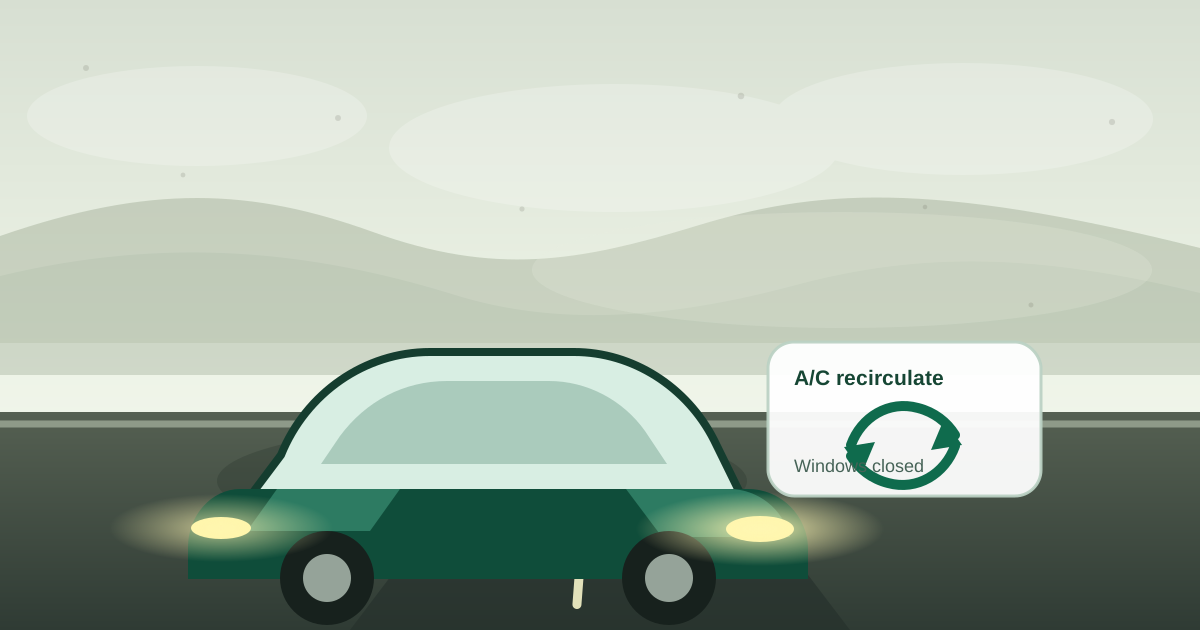
Driving in wildfire smoke means handling two problems at once: reducing the amount of smoky air entering the vehicle and adjusting for visibility that may change quickly. If the trip is not necessary, delaying travel is often the lowest-risk option. If you must drive, correct climate-control settings and a few defensive-driving habits can reduce smoke exposure and lower crash risk.
Current New York Conditions
Current New York conditions can change quickly. Before traveling, check AirNow, New York State air-quality alerts and National Weather Service warnings for your route.
Quick Answer
When wildfire smoke is heavy, close the windows and switch the climate-control system to recirculate mode to reduce the amount of smoky outside air the vehicle keeps pulling in. If smoke affects visibility, slow down, increase following distance and manually turn on low-beam headlights. Before leaving, check both air quality and thunderstorm conditions. If smoke is very dense, the road is hard to see or severe thunderstorms are approaching, consider delaying nonessential travel.
Key Takeaways
- Check the AQI before starting the trip.
- Close windows and use air-conditioning recirculation in heavier smoke.
- Do not keep recirculation on indefinitely in every situation.
- Slow down when smoke affects visibility.
- Use low beams, not high beams.
- Leave more following distance than usual.
- Delay nonessential travel when conditions become severe.
Why wildfire smoke can affect driving safety
Wildfire smoke contains fine particles that can enter a vehicle through open windows, outside-air vents, the ventilation system and small gaps around doors or the body. Smoke may irritate the eyes and respiratory system. Children, older adults, pregnant people and people with asthma, chronic obstructive pulmonary disease, heart disease or other chronic conditions may need extra caution.
Smoke can also affect what a driver sees. Road signs may blur at a distance, road contrast can drop, drivers may misjudge following distance, pedestrians and cyclists can be harder to spot, lights can glare and visibility can change from one neighborhood or roadway segment to another.
Even when the road ahead looks fairly clear, a ventilation system that keeps drawing outside air may still pull smoke particles into the cabin.
Tip 1
Check the AQI before you drive
Before starting the vehicle, check the air quality index for both your starting point and your destination. Useful official sources include AirNow, the AirNow Fire and Smoke Map, New York State Department of Environmental Conservation air-quality notices, National Weather Service alerts and local emergency-management updates.
Do not check only the AQI near your home. New York City, Long Island, the Hudson Valley, Central New York and Western New York can have very different air-quality conditions. On longer trips, air quality can also change while you are on the road.
Practical move
Check three places along the route: the starting point, a midpoint and the destination. For example, if you are driving from New York City to Albany, Syracuse or Buffalo, checking only New York City's AQI may not be enough.
Tip 2
Close the windows and turn on recirculation
One of the most useful vehicle settings in smoky conditions is recirculation mode. The button usually shows a small car with a curved arrow inside it. When recirculation is on, the system reuses more cabin air instead of continuously drawing smoky outdoor air into the vehicle.
The U.S. Environmental Protection Agency advises people traveling by car during heavy wildfire smoke to close windows and set the air conditioner to recirculate.
Practical move
Turn on the air conditioner first, then press the recirculation button. Many vehicles automatically disable recirculation when the front defrost mode is selected, so glance at the indicator light whenever you change climate-control modes.
Tip 3
Do not use recirculation forever
Recirculation can reduce smoke entering the cabin, but it is not a setting to leave on in every condition for the entire day. Long drives with continuous recirculation can increase humidity, fog the windows and make the cabin feel stale, especially with several passengers.
A practical approach is to use recirculation while passing through heavier smoke, briefly bring in outside air when you reach cleaner conditions, switch to defrost promptly if windows fog and never sacrifice forward visibility just to keep recirculation on.
If the windshield fogs, seeing the road clearly becomes the first priority.
Tip 4
Check the cabin air filter
The cabin air filter helps catch dust, pollen and some airborne particles before they move through the ventilation system. A very dirty filter can reduce airflow, weaken cooling, create odors and slow defogging.
Check and replace the filter according to the vehicle owner's manual. If the vehicle is frequently driven in dust or smoke, it may need attention more often.
Practical move
In the owner's manual, search for terms such as cabin air filter, pollen filter or passenger-compartment filter. Some vehicles can use higher-efficiency compatible filters, but installing a filter with too much airflow resistance may reduce ventilation performance. A cabin filter can reduce some particles, but it cannot make a vehicle completely smoke-proof.
Tip 5
Use low beams when visibility drops
When smoke becomes thick enough to affect visibility, turn on low-beam headlights. Low beams help you see and help other drivers see your vehicle. In most vehicles, turning on normal headlights also activates the tail lights.
Do not rely completely on daytime running lights. Some vehicles illuminate only front lights in daytime-running-light mode, leaving the rear of the vehicle harder to see in haze or smoke. Avoid high beams because bright light can reflect off smoke particles and create more glare.
Practical move
Turn the lighting control to the normal low-beam position. Do not rely only on AUTO mode; daytime smoke can still be bright enough that the sensor may not turn on the full front and rear lighting system.
Tip 6
Increase following distance
When smoke reduces visibility, you have less time to notice stopped traffic, pedestrians, obstacles or merging vehicles. Smoothly reduce speed, increase following distance, avoid sudden lane changes, expect the vehicle ahead to slow unexpectedly and scan farther ahead for brake lights.
Do not tailgate another vehicle just to follow its lights. That can create a false sense of safety and increase the risk of a chain-reaction crash.
Practical move
When the vehicle ahead passes a fixed object, such as a sign, bridge post or road marking, start counting. In smoke, try to leave at least four seconds before your vehicle passes the same point. Add more space when smoke is denser or the pavement is wet.
Tip 7
Know when not to keep driving
Climate-control settings cannot solve every danger. Consider delaying nonessential driving when visibility is dropping quickly, smoke blocks traffic lights or road signs, the AQI creates a meaningful health risk for the driver or passengers, a passenger has breathing difficulty, dizziness or chest discomfort, severe thunderstorms or damaging winds are approaching, or public officials advise avoiding travel.
If visibility suddenly becomes very poor while you are already driving, do not stop in a travel lane. Look for a safe exit, parking lot, rest area or another place away from traffic. Until you reach a safe place, slow smoothly and avoid abrupt braking.
Should you wear an N95 in the car?
A properly fitted N95 respirator can help reduce exposure to fine particles. It does not replace closed windows, recirculation, a working ventilation system, reducing time outside or postponing unnecessary travel.
People with respiratory conditions, or anyone who feels unwell while wearing a mask, should consider medical guidance for their situation. Drivers should also make sure any mask does not interfere with vision, glasses or safe vehicle operation.
Can wildfire smoke damage a vehicle?
A short smoke event will not necessarily damage a vehicle, but long or severe exposure can dirty the cabin filter, leave smoke odors in fabric, coat the body or glass with ash and dust, reduce window clarity and allow particles to collect near air intakes.
If ash settles on the vehicle, do not wipe it off with a dry cloth. Ash particles can scratch paint. Gently rinse particles away with water before normal washing, and avoid spraying water directly into the vehicle's air intake.
Why smoke plus thunderstorms can be more dangerous
When smoke and thunderstorms overlap, road conditions can change quickly. Rain may temporarily improve air quality, but the first rainfall can mix with oil and dust on the roadway and make pavement slick. Strong winds may blow branches, trash cans, construction signs or loose debris into travel lanes. Heavy rain can further reduce visibility.
Before leaving, check more than AQI. Look for thunderstorm warnings, high-wind warnings, flood and ponding risks and road-closure information. Acceptable air quality does not always mean the road weather is safe.
Related New York driving resources
For broader driving research, you can compare New York defensive driving courses, read the New York defensive driving course guide, review New York work-zone speed camera rules, browse new driver safety essentials, or find state defensive driving information.
Frequently Asked Questions
Should I use recirculate or fresh air when driving in wildfire smoke?
In heavier wildfire smoke, the practical starting point is usually to close the windows and use recirculate mode so the car does not continuously pull smoky outside air through the ventilation system.
What does the recirculation button look like?
It commonly looks like a small car with a curved arrow inside it. Icons vary by vehicle, so check the owner's manual if you are unsure.
Can defrost mode and recirculation work at the same time?
Some vehicles turn recirculation off when front defrost is selected. If the windshield is fogging, clear forward visibility should come first.
Should I use high beams in wildfire smoke?
Usually no. High beams can reflect off particles in the air and create more glare. Low beams are normally the better choice for low-visibility conditions.
Do daytime running lights turn on my tail lights?
Not always. Manually turning on normal low-beam headlights is a more reliable way to make sure both front and rear lights are on.
Can a cabin air filter completely filter wildfire smoke?
No. A good cabin air filter can reduce some particles, but vehicles are not sealed environments and filtration depends on the vehicle and filter.
Should I drive with hazard lights on in smoke?
Hazard-light rules and appropriate use can vary by location and road situation. Hazard lights do not replace slowing down, using low beams and leaving the road when conditions are unsafe.
Where can I check current smoke conditions?
AirNow, the AirNow Fire and Smoke Map, New York State air-quality alerts and National Weather Service warnings are useful places to check before a trip.
Bottom Line
The most practical cabin-air move in smoky driving conditions is simple: close the windows and set the air conditioner to recirculate. That setting can reduce the amount of smoky outside air the vehicle keeps pulling in.
Cabin air is only one part of the risk. Drivers also need to think about visibility, wet pavement, thunderstorms, wind and passenger health. Check weather and AQI before leaving, use low beams when visibility drops, increase following distance and delay travel when smoke or storms make the road unsafe.
Official Sources
Disclaimer
This Guide is for general educational information only and is not medical, legal or insurance advice. Air quality, weather and road conditions can change quickly. Follow the latest instructions from public-health, weather and emergency-management agencies.